

A factory in Gujarat covers every available shed with rooftop solar, draws nearly half its power from renewables, and still gets a non-compliance notice from the state regulator. Because solar does not close the wind portion of the Renewable Purchase Obligation (RPOs) in India. This information is not easily available to commoners outside of the energy industry.
This blog walks through what RPO is, how it quietly became the Renewable Consumption Obligation, which companies sit inside the compliance net, and why wind power has turned into a route most large electricity users can no longer ignore.
|
Financial Year |
Wind Subtarget |
|
|
FY 2024-25 |
29.91% |
0.67% |
|
FY 2025-26 |
33.01% |
1.45% |
|
FY 2026-27 |
35.95% |
1.97% |
|
FY 2027-28 |
38.81% |
2.45% |
|
FY 2028-29 |
41.36% |
2.95% |
|
FY 2029-30 |
43.33% |
3.48% |
The Renewable Purchase Obligation meaning is a mandate under Section 86(1)(e) of the Electricity Act, 2003, that requires distribution licensees and large electricity consumers to source a fixed share of their power from renewable energy.
The target is not optional. It rises every year. From FY 2024-25 onward, it carries a clear penalty structure under the Energy Conservation Act.
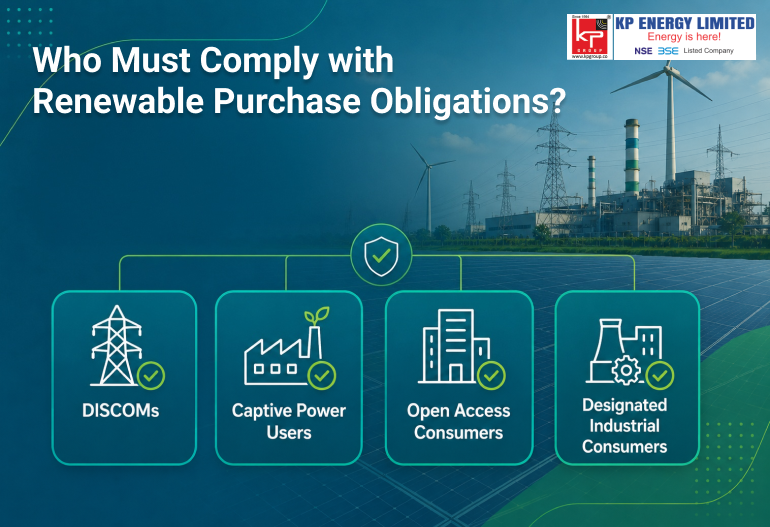
Four categories sit directly inside the compliance net under current RPO regulations in India.
State distribution companies.
Captive power users.
Open access consumers.
Designated industrial consumers (tracked by the Bureau of Energy Efficiency).
A facility that runs above the BEE threshold and draws power from the grid or operates a captive plant is almost certainly already obligated. Most companies discover this not at the planning stage, but during their first BEE filing.
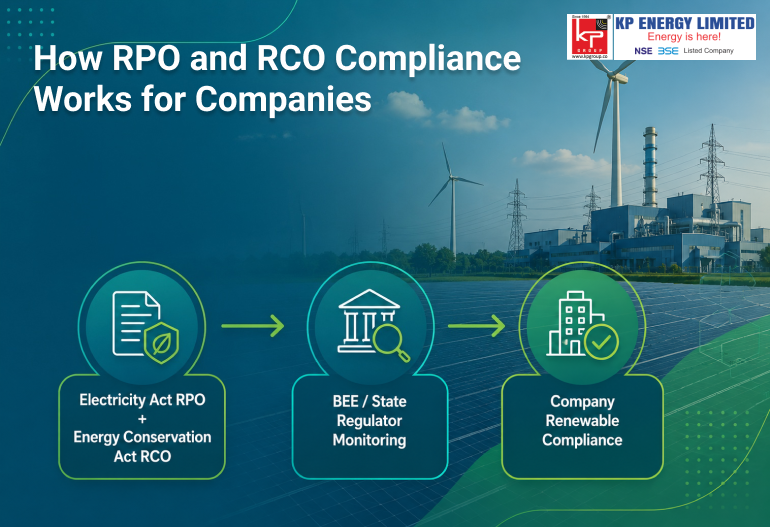
India has not completely replaced the Renewable Purchase Obligation (RPO) with the Renewable Consumption Obligation (RCO). In October 2023, the Ministry of Power introduced an RCO framework applicable from FY 2024–25 under the Energy Conservation Act. It requires designated consumers to meet a specified share of their electricity consumption through renewable sources, with BEE responsible for maintaining compliance data and monitoring implementation.
Meanwhile, RPO continues to be used in regulations issued by many State Electricity Regulatory Commissions. RPO and RCO should therefore be understood as related and overlapping compliance frameworks rather than as a simple change in terminology.
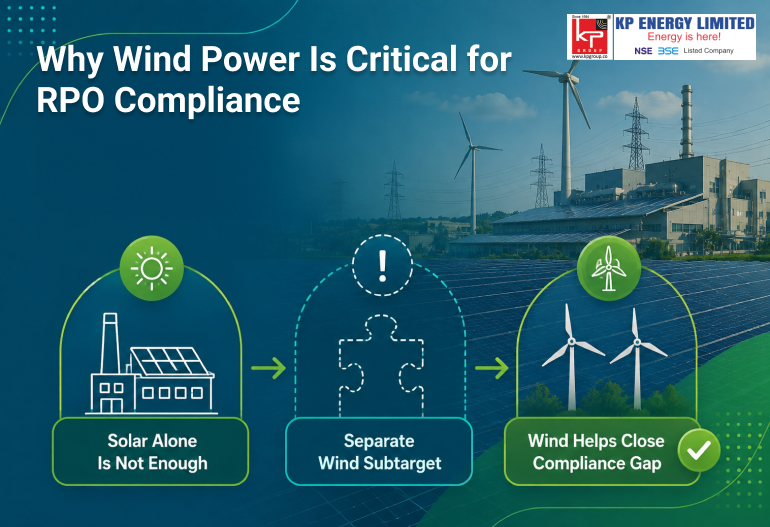
Wind has its own subtarget inside RCO. That share cannot be met with solar, hydro, or any other source. A factory running fully solarised rooftops still needs to procure wind power separately.
Two other factors strengthen the case for wind energy for RPO compliance. Utility scale wind delivers higher capacity factors than rooftop solar, and the ISTS charge waiver remains active for wind projects commissioned before June 30, 2028.
For companies planning long term procurement, the timing window is now a planning input, not a footnote. Wind PPAs are also evolving, especially as how hybrid renewables are reshaping power purchase agreements changes how these contracts are priced and structured.
|
Compliance Route |
What It Involves |
Best Suited For |
|
Company owns 26%+ stake in a wind plant and consumes the power |
Large manufacturers with stable demand and capital investment capacity |
|
|
Group Captive |
Multiple companies co-own a wind plant under the captive structure |
Mid sized industrial users sharing infrastructure |
|
Open access renewable energy India PPA |
Long term wind power purchase for companies from an independent developer |
Businesses wanting renewable supply without owning the asset |
|
Renewable energy certificates India |
Buy wind RECs from IEX or PXIL to offset obligation on paper |
Smaller consumers or short term gap fillers |
Penalty exposure has shifted from token to material. State regulators now impose fines tied to the prevailing REC price.
When applied to substantial power consumption shortfalls, these costs can accumulate quickly.
The Madhya Pradesh and Rajasthan regulators have already moved on suo motu proceedings against non compliant entities.
Corporate renewable energy compliance is no longer a back office line. It now sits in the same conversation as power tariffs, audit risk, and ESG reporting.
Audit current RPO and RCO obligation against the published FY trajectory before the next BEE filing cycle.
Decide between owning generation through a captive wind power project or contracting it via open access.
Plan around the ISTS waiver window, which closes for projects commissioned after June 30, 2028.
Treat wind power procurement for businesses as a long term contract decision, not a one time fix.
Use RECs to cover gaps, not to replace physical wind procurement.
What is the Renewable Purchase Obligation in India and who set it?
The Renewable Purchase Obligation is a mandate under Section 86(1)(e) of the Electricity Act, 2003. It requires distribution licensees and large electricity consumers to procure a defined share of their power from renewable sources each year. State Electricity Regulatory Commissions set the specific targets, guided by the Ministry of Power's national framework.
What is the difference between RPO and RCO compliance?
RPO was the original obligation framework under the Electricity Act. From FY 2024-25, it has been restructured into the Renewable Consumption Obligation under the Energy Conservation Act, with the Bureau of Energy Efficiency overseeing compliance. The intent is the same. The enforcement is now statutory rather than advisory.
Can a company meet its RPO entirely through wind power?
Not entirely. Wind can meet the wind sub target and contribute to the overall RPO, but the framework includes separate components for solar, hydro, and distributed renewables. Most large industrial users now combine wind, solar, and RECs to close their full obligation.
How do Renewable Energy Certificates help with RPO compliance?
Renewable Energy Certificates let companies meet their RPO without generating renewable power on site. One REC represents one megawatt hour of renewable electricity. Companies buy these on IEX or PXIL exchanges to cover shortfalls. Wind RECs specifically address the wind sub target.
What is the penalty for missing RPO targets in India?
Penalties are calculated against the prevailing REC price plus state imposed fines under the Energy Conservation Act. Non compliance also triggers BEE reporting and possible suo motu proceedings by state regulators. The financial exposure has tightened sharply since 2024.