

The landscape of renewable energy is rapidly changing as hybrid renewables power purchase agreements are emerging as true game changers in the global energy marketplace. Traditional single-source renewables projects are being replaced by new hybrid renewable energy projects with multiple clean energy technologies that create value for energy consumers and corporate clients. The evolution is a paradigm shift in how corporations view corporate renewable energy procurement and negotiate long-term energy contracts.
As companies across the world expand their sustainability commitments, the shortcomings of traditional PPAs are clear. Hybrid renewable energy projects address these woes by delivering greater reliability, creating better cost structures, and offering flexible power delivery mechanisms that are more responsive to modern power needs. Solar-wind hybrid power plants with advanced storage systems are changing the entire contract structure around renewable energy.
Hybrid renewable energy projects are a smart way to generate clean energy by combining two or more renewable technologies at a single location to enhance energy generation while minimizing variability. The main benefit of this configuration is its complementary generation profiles: solar panels produce the greatest energy output during the day, while wind projects tend to have their highest energy output in the evening and overnight.
This natural complementarity allows projects using both solar and wind energy to produce a more balanced energy output that is a better match for typical demand profile patterns. As a result of these advantages, hybrid renewables power purchase agreements are becoming more appealing to corporate buyers because projects using hybrid technology provide complementary generation capabilities.
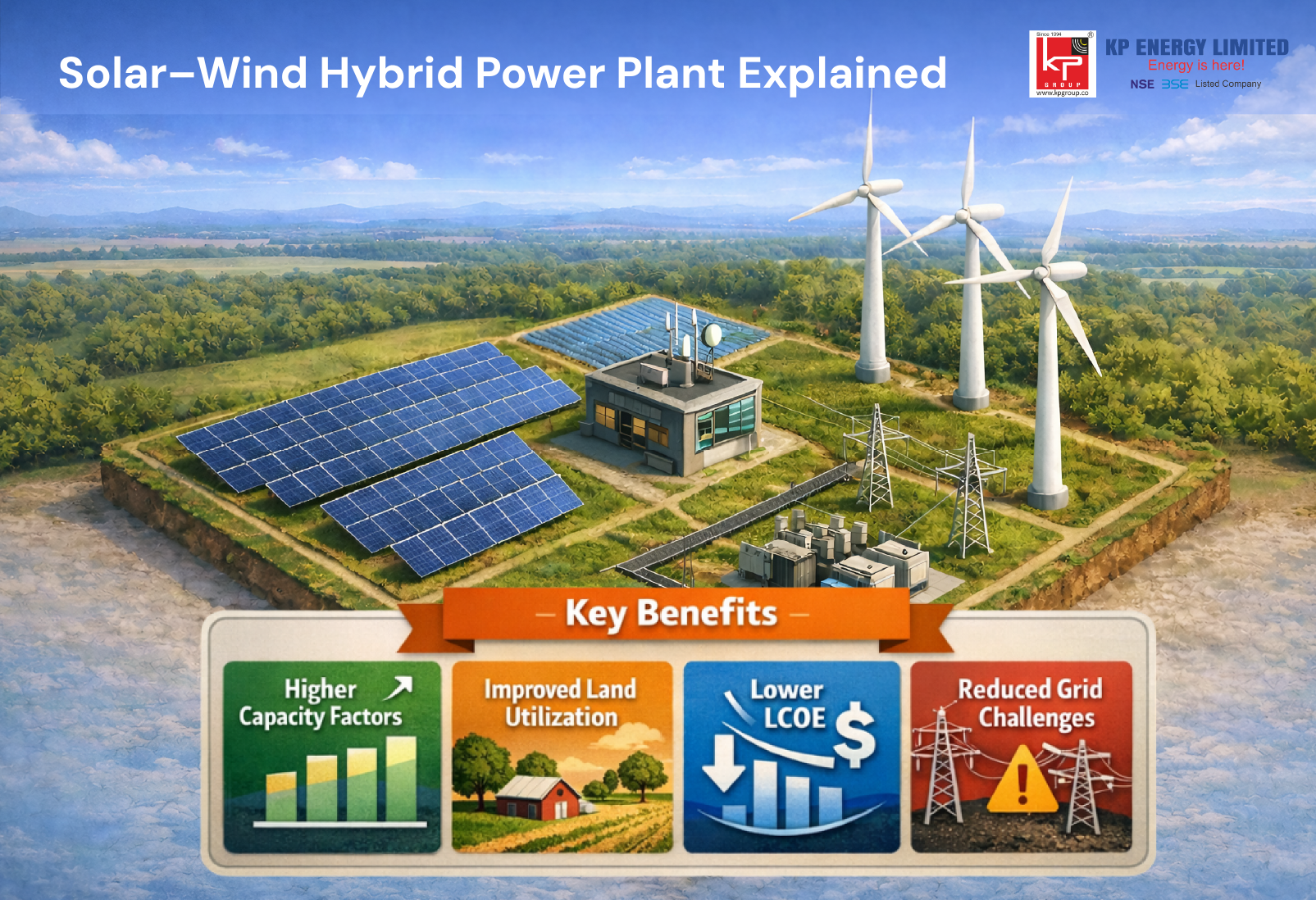
Solar-wind hybrid power plants are the most frequent arrangement of hybrid renewable projects, in which photovoltaic arrays are purposely coupled with wind turbines in order to maximize the efficiency of generating energy on a given land and take advantage of both renewable energy technologies.
The use of integrated technology includes advanced systems to condition the power outputs produced from each resource, adjusting the outputs to maintain a continuous grid and provide the best power efficiency. Complex and advanced systems can assist with real-time optimization of the output from each technology based on weather forecasting, future demands, and observation of grid requests.
Key advantages of solar-wind hybrid power plants include:
Enhanced capacity factors compared to single-technology projects
Reduced transmission infrastructure requirements
Improved land utilization efficiency
Lower overall levelized cost of energy (LCOE)
Decreased grid integration challenges
The function of battery storage systems is an increasingly important aspect of renewable hybrid energy projects as they mitigate the variability of renewable sources and add additional grid services. The addition of battery storage enables hybrid renewable energy projects to offer firm power delivery guarantees, which makes flexible power agreements within renewable energy contracts more attractive to corporate energy buyers that require dependable energy delivery.
Modern battery storage technology provides multiple services, including peak shaving, frequency regulation, voltage support, and backup power capabilities. This multi-faceted approach increases the value proposition of a hybrid renewables PPA by delivering value-adds over just energy delivery.
PPAs in renewable energy serve as the foundational contracts that enable the development and financing of clean energy projects. These long-term agreements provide revenue certainty for project developers while offering corporate buyers predictable energy costs and sustainability benefits.
The trend toward hybrid projects has called for integrated contracts that recognize the complex operational features of multi-technology projects. Renewable energy contracts need to adapt to variable patterns in generation, storage, dispatch, and multiple revenue sources.
Renewable energy contract models have evolved significantly to accommodate the growing complexity of modern clean energy projects. Physical PPAs involve actual electricity delivery to corporate buyers, while virtual PPAs (VPPAs) provide financial hedging without physical delivery. Hybrid renewables power purchase agreements often incorporate elements of both models to optimize risk allocation and financial outcomes.
Emerging contract structures include:
Shaped PPAs: Contracts that deliver power according to predetermined profiles rather than flat generation curves
Portfolio PPAs: Agreements that source power from multiple projects or technologies
Storage-backed PPAs: Contracts that guarantee firm delivery using battery storage
Time-of-use PPAs: Agreements with pricing that varies based on delivery timing
Corporate renewable energy procurement has rapidly expanded as corporations have recognized both environmental and economic benefits from long-term contracts for renewables. Corporations are able to meet their sustainability commitments using power purchase agreements (PPAs), while also mitigating costs through predictable pricing that is less volatile than fossil fuels.
There are several reasons why companies prefer renewable PPAs, including compliance, stakeholder pressure, cost competitiveness, and brand value enhancement. Hybrid renewable energy projects provide added value in terms of reliability and sophisticated energy products that meet companies' operational needs.
For companies evaluating long-term ownership and asset-backed renewable strategies, hybrid PPAs also align well with the Independent Power Producer (IPP) model, where businesses can participate directly in clean energy generation while securing predictable power costs.
The emergence of hybrid technologies is changing the landscape of traditional PPA structures and offering innovative opportunities for buyers and sellers alike. Hybrid renewables power purchase agreements create greater value propositions with greater capacity factors, lower price volatility, and increased operational flexibility.
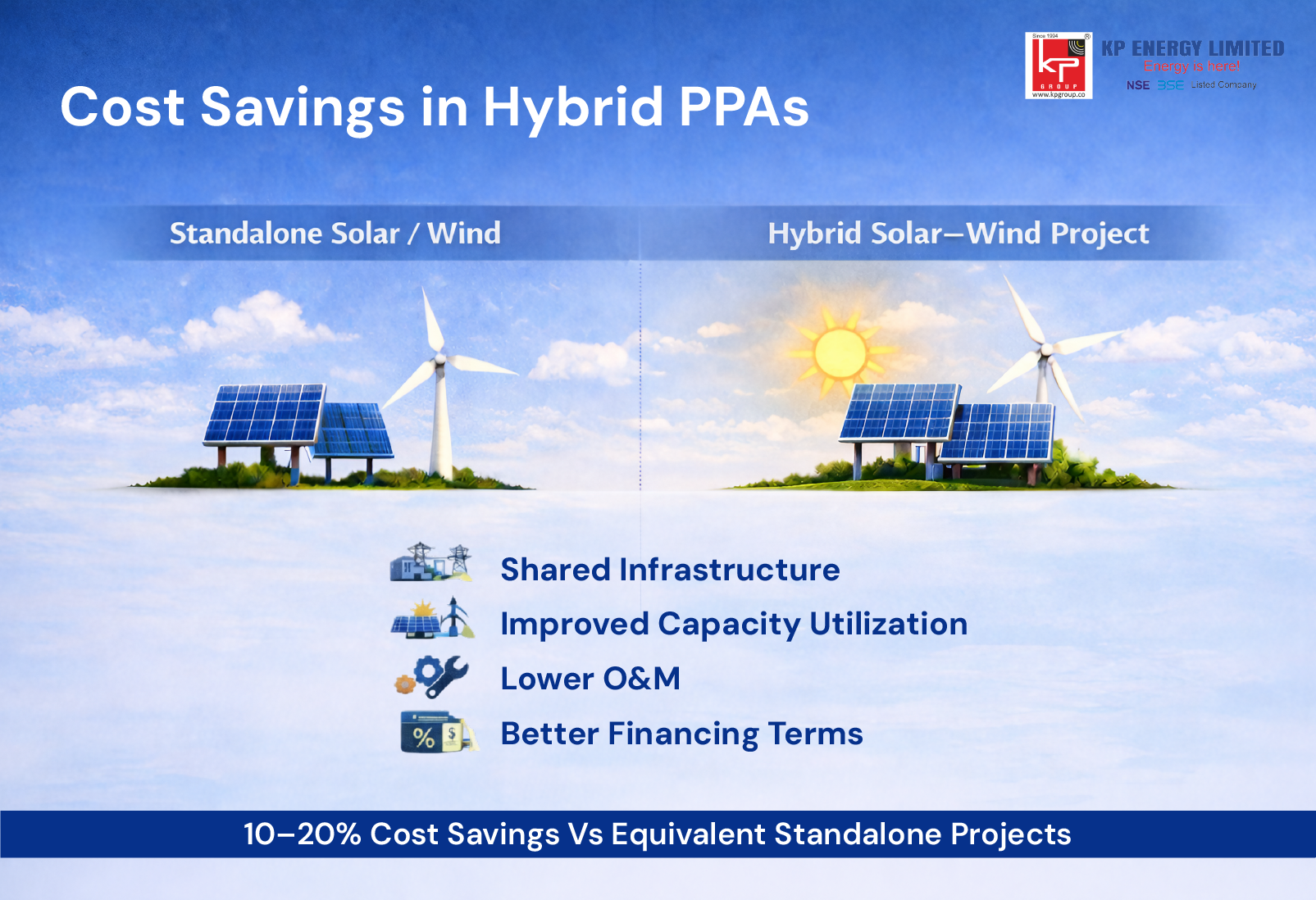
Cost savings in hybrid PPAs emerge from multiple sources, including improved capacity utilization, reduced transmission costs, and enhanced operational efficiencies. Hybrid renewable projects demonstrate improved capacity factors, such as reduced downtime when generating, compared to traditional standalone solar or wind projects with similar decommissioning costs per megawatt of installed capacity. This translates to a lower cost per unit of electricity consumed.
Shared infrastructure reduces capital costs per MW of generating capacity, along with lower operating and maintenance expenses to ensure improved operational utilization in producing solar and wind energy. Hybrid renewables plants, for example, can achieve a 10-20% cost savings as compared to an equivalent standalone solar or standalone wind project. The PPA market for hybrid renewables is already more cost-competitive as a result.
Additional cost benefits include:
Reduced grid connection and transmission expenses
Lower financing costs due to improved revenue predictability
Optimized maintenance scheduling across technologies
Enhanced tax credit and incentive utilization
Improved project bankability and financing terms
Flexible power agreements in renewable energy contracts represent a significant advancement in PPA design, enabling dynamic dispatch strategies and customized delivery profiles. These agreements allow corporate buyers to specify when and how they want their renewable energy delivered, providing greater alignment with operational requirements.
Energy storage systems in hybrid projects have the ability to provide time-shifted energy delivery, peak demand shaving, and backup power. This enhanced flexibility creates additional value streams for both parties and permits more complex energy management strategies.
Hybrid renewable energy projects contribute significantly to grid stability and reliability through their more consistent power output and ability to provide ancillary services. The combination of multiple generation sources allows for lower variability associated with individual renewable generating technologies. Consequently, flexible hybrid renewable energy produces a more reliable energy supply.
Advanced grid integration capabilities enable these projects to provide frequency regulation, voltage support, and other critical grid services. The improved reliability of both power purchase agreements and project development may also make hybrid renewables power purchase agreements more appealing to grid service operators and provide added revenue opportunities through ancillary services.
Corporate renewable energy procurement is increasingly incorporating hybrid strategies to achieve multiple purposes at once. Large energy users realize that hybrid renewable energy projects deliver enhanced value propositions through greater reliability, better cost structures, and increased operational flexibility.
Changes in corporate procurement behavior reflect better overall energy management and increased acceptance of responsible energy alternatives as central to any company's strategy. For example, hybrid renewables power purchase agreements (PPAs), can help companies align their sustainability goals with more reliable operations and increased savings.
Large-scale energy users have much to gain from hybrid renewables PPAs, including energy security benefits, sustainability benefits, and financial benefits. Reliability improvements from hybrid projects reduce operational risks and provide greater assurance of continuity of supply.
Corporate buyers benefit from:
Reduced energy price volatility as hybrid projects offer more stable pricing due to improved capacity factors
Enhanced sustainability reporting since multiple technology types strengthen renewable energy claims
Operational flexibility as storage integration enables demand response and peak management
Grid services revenue sharing, as participation in ancillary services markets provides additional value
Improved risk management because diversified generation sources reduce weather-related risks
The future of renewable PPAs is increasingly intertwined with hybrid technology adoption as these solutions address fundamental limitations of traditional renewable contracts. Market projections indicate substantial growth in hybrid project development driven by improving economics and enhanced value propositions.
Regulatory support for hybrid projects is evolving, with recognition from policymakers regarding their critical role in grid stability and renewable energy goals. The overlap of union tax credits, state renewable portfolio standards, and corporate sustainability commitments presents a prime opportunity for hybrid renewable energy projects.
Solar-wind hybrid power plants that blend solar and wind power are a rapidly expanding sector of the hybrid renewable industry, with project pipelines emerging worldwide. Advances in solar and wind technologies, along with declining storage costs, are driving rapid adoption of these hybrid plants.
Market research indicates that hybrid projects are likely to comprise close to 30-40% of new capacity additions in renewables in the next decade, creating considerable market change for power purchase agreements (PPAs). The economics and generation profile of solar-wind hybrid plants reinforce their role within the utility-scale renewable project development space.
The long-term outlook for hybrid renewables power purchase agreements remains strong due to continued improvement in market fundamentals. Falling technology costs, better performance characteristics, and increasing corporate demand provide a solid platform for sustained market growth.
Power purchase agreements for hybrid renewable energy are transforming corporate renewable energy procurement by increasing reliability, cost savings, and operational flexibility. With solar-wind hybrid generation paired with storage, these solutions leverage the strengths of both solar and wind technologies while offering more flexibility to work around the constraints of traditional solar and wind power purchase agreements.
The evolution of the market will make hybrid renewable energy projects a critical part of achieving sustainability and reliability objectives. As technology performance improves and flexible power agreements mature, hybrid PPAs will offer increasingly compelling and viable solutions for energy buyers.
To learn more about how hybrid PPAs can benefit your business, get in touch with us today.
What Is a Hybrid Renewable PPA?
A hybrid renewable energy power purchase agreement is a long-term contract to purchase electricity from projects using multiple renewable technologies, such as solar and wind, supported by battery storage. Hybrid Power Purchase Agreements provide corporate buyers with a more consistent and lower-cost renewable energy.
How Do Solar-Wind Hybrid Projects Reduce Costs?
Solar-wind hybrid power plants lower costs by delivering higher capacity factors, shared infrastructure, enhanced operating practices, and improved financing. Since solar and wind generation profiles are complementary, they produce energy at different times while utilizing transmission and interconnection facilities more efficiently.
Are Hybrid PPAs Better Than Traditional PPAs?
Hybrid renewable energy projects often offer more compelling value propositions than traditional single-technology PPAs due to enhanced reliability, improved cost structure, as well as operational flexibility. Benefits vary depending on project configuration, site location, and corporate requirements.
What Is the Future of Renewable PPAs?
The future of renewable PPAs will increasingly be shaped by hybrid solutions as technology costs decline and corporate buyers demand more sophisticated energy products. Flexible renewable power agreements will become standard as storage integration and grid services capabilities expand.