

A PPA for wind or hybrid projects is a long term contract between a power generator and an offtaker. It defines tariff, tenure, contracted capacity or energy, payment terms, scheduling, curtailment, risk allocation, and termination conditions. A bankable PPA improves revenue visibility and helps secure project financing.
For wind and hybrid renewable projects, a Power Purchase Agreement (PPA) is more than a sales contract; it is the financial anchor that supports revenue certainty, risk allocation, and project bankability.
In the renewables sector, being able to predict your finances is paramount. This is where a PPA structure for renewable energy plays such a critical part in locking in predictable cash flow for up to 20-25 years. Whether it is a standalone wind farm project or a wind-solar hybrid project, wind energy power purchase agreements and hybrid agreements define how electricity will be supplied, priced, scheduled, paid for, and managed over the contract period.
This blog explores how to arrange PPAs wisely, without becoming mired in the technicality of PPA terms for wind and hybrid projects, the structure of the price for such projects, risk management, and financing.
A PPA is a long term contract between a power generator and an offtaker that defines tariff, tenure, contracted capacity or energy, payment terms, scheduling, risk allocation, and termination conditions.
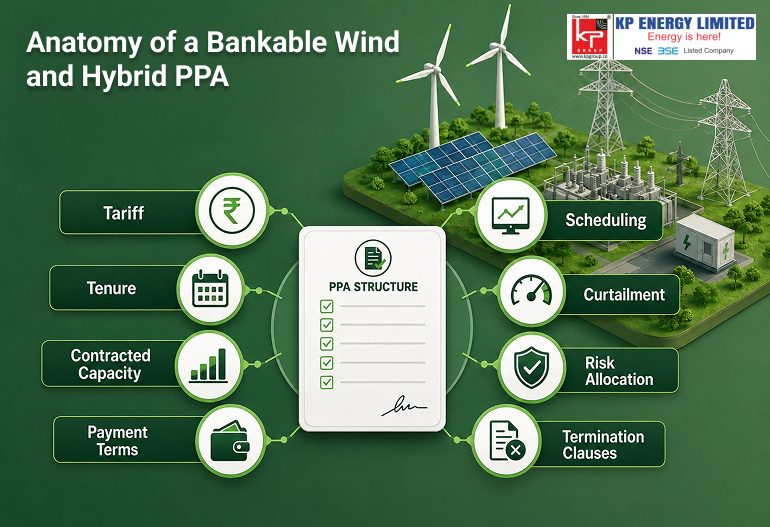
This contract can be between an electricity generator, such as an IPP or developer, and an offtaker, such as a DISCOM, corporate buyer, utility, or trader, for the supply of electricity under defined commercial and technical terms..
In wind energy power purchase agreements contracts also include the sale of power from the wind source in fixed or indexed tariffs. However, in hybrid power purchase agreements, the combination of wind and solar with storage options achieve better grid alignment and generation curves.
In the context of wind and hybrid projects, it is the variability of PPAs which makes these different from the rest. Also, since power plants require the use of natural resources in the form of wind in the case of wind projects or wind/hybrid projects in the case of hybrid projects, there are certain clauses in the PPA which are related to these factors. Such factors outline:
How much power will be supplied (contracted capacity vs. actual generation)
At what price (tariff structure)
Tenure
In what conditions the risks are shared by both the buyer and seller
A well structured PPA improves project bankability by clearly defining revenue, risk allocation, payment security, and operational obligations.
The average term for PPA structure for renewable energy is 20-25 years. A longer contract term enhances debt repayment capacity; however, it enhances risks associated with government regulations. The term of the PPA must be compatible with the life of the asset as well as technology performance.
The PPA can only be as good as the balance sheet supporting the buyer. In any renewable energy contract negotiations, the lenders evaluate very carefully the payment records, credit rating, and government support (for DISCOMs) of the offtaker.
Smart PPAs allocate risk to the party that can best manage it:
1. Resource risk generally lies with the developer
2. Payment risk: This risk belongs to the offtaker
Risks associated with policy or regulation may be allotted or shared.
A grid unavailability or curtailment can be a major issue in the case of wind and hybrid projects. Deemed generation rules and priority dispatch rights can be properly covered in well drafted PPAs.
The meaning of PPA terms for wind and hybrid projects is extremely important, not only to lawyers but to project developers as well as financiers.
|
Term |
Meaning |
Why It Matters |
|
Tariff and Escalation |
Defines the electricity price and whether it remains fixed. Increases over time, or is linked to an index such as inflation. Hybrid PPAs may also use blended tariffs based on different generation sources or delivery periods. |
Determines long term revenue for the developer and energy cost visibility for the buyer. |
|
Contracted Capacity vs Delivered Energy |
Contracted capacity refers to the committed project capacity in MW, while delivered energy refers to the electricity supplied in kWh or MWh. Some hybrid PPAs may also specify time-of-day or scheduled delivery obligations. |
Clarifies whether performance is measured by installed capacity, actual energy supplied, or delivery during specific periods. |
|
Availability and Performance Guarantees |
Sets the agreed standards for plant availability, generation performance, scheduling, or energy delivery. Failure to meet these standards may result in penalties or liquidated damages, depending on the contract. |
Protects the buyer against underperformance and affects the developer’s operational and financial obligations. |
|
Force Majeure |
Covers exceptional events beyond the control of the parties, such as extreme weather, grid disruptions, natural disasters, or certain government actions. |
Clearly defined events, relief provisions, and timelines help reduce disputes when performance is temporarily affected. |
|
Termination and Exit Clauses |
Specifies when either party may terminate the PPA. Including payment default, prolonged force majeure, regulatory changes, or repeated contractual breaches. |
Determines exit rights, compensation obligations, lender exposure, and overall investment risk. |
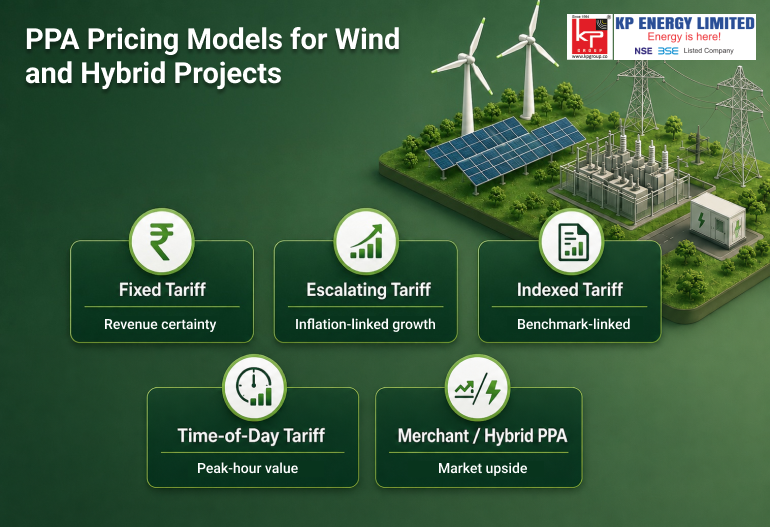
Pricing is where strategy meets reality. PPA pricing models for wind energy have undergone significant changes over the last ten years.
Common pricing structures include:
Fixed tariff
Escalating tariff
Indexed tariff
Time-of-day tariff
Merchant-linked or partially merchant structures
It is the most common structure, especially in utility scale wind. A fixed tariff provides revenue certainty but exposes developers to long term inflation risks.
Tariffs may increase annually or be indexed against inflation benchmarks, partly offsetting increased O&M costs.
The tariff is linked to an agreed benchmark, such as an inflation index. The contract must clearly define the index, adjustment frequency, limits, and calculation method.
Time of day availability in pricing is increasingly becoming factored into hybrid energy PPA contracts, thereby making hybrids more attractive than standalone wind power since power supplied during peak hours commands higher tariffs.
Some hybrid projects mix contracted PPAs with merchant sales, balancing risk and upside. While riskier, these structures can significantly improve returns if market prices rise.
The viability of PPA financing for wind projects is largely dependent on predictability. The guarantee offered by a PPA is the major collateral offered for the loan.
Loan providers consider these for reliability:
PPA Tenure vs. Loan Tenure
Payment security mechanisms (LCs, escrow accounts)
Termination compensation clauses
Curtailment in history
Having firm energy contract structuring for wind farms helps ensure stable cash flow, even in stress scenarios, whether it’s due to delays, connectivity problems, or changes in tariffs.
Letters of credit, escrow arrangements, as well as state guarantees, can considerably raise lenders' confidence, particularly in relation to state owned public utilities.
Hybrids tend to receive better ratings for bankability because they have diversified power production, stronger CUF values, and less curtailment risk, which are very much desired by bankers.
PPA risks are shared between the developer, buyer, grid authorities, and other parties based on who can best manage them. Developers usually handle construction, performance, forecasting, and scheduling risks, while buyers carry payment and offtake obligations.
Wind-solar hybrid projects can reduce generation variability and delivery risk, but they do not eliminate resource, grid, regulatory, or performance risks.
|
Risk Type |
Typically Borne By |
Mitigation Mechanism |
|
Energy delivery shortfall (low wind) |
Developer, subject to PPA terms |
Conservative generation estimates, wind–solar hybridisation and realistic minimum CUF commitments |
|
Grid curtailment / evacuation constraints |
Contract-specific |
Generation compensation provisions for qualifying outages or reduced offtake, subject to evidence and exclusions |
|
Forecasting / scheduling accuracy |
Developer / generator |
Forecasting systems, schedule revisions and compliance with deviation settlement rules |
|
Regulatory change (law, tax, transmission charges) |
Allocated to the affected party under the PPA |
Change-in-law clause allowing tariff or charge adjustments |
Long term power purchase agreements have become the driving force in the development of renewable power due to the ability to monetize intermittent generation to achieve stable cash flows. A preferable contract term is between 20 and 25 years.
From the perspective of a PPA structure for renewable energy, long term contracts will decrease merchant risk and tariffs by providing a lower cost of debt for the development of such projects. The tariffs, whether fixed or indexed, provide a long term revenue stream where the hybrid PPAs are becoming more commonplace with the inclusion of 'time of day' delivery.
However, long term contracts come with their own set of challenges. The developers will be facing risks of inflation, change in grid regulations, and technological obsolescence. Simultaneously, customers will be dealing with long term competitiveness of pricing in renewable energies. In this case, power purchase agreements may contain mechanisms regarding tariff reviews, performance criteria, as well as exit strategies.
Well designed long term PPAs can strike an effective balance between certainty and flexibility; they provide surety without forcing either side into an unworkable agreement.
The formation of Power Purchase Agreements (PPAs) for wind & hybrid projects is where risk management, achievable performance thresholds, and respective financing terms can make PPAs more robust, dynamic, and enduring.
The key for wind and hybrid projects is in adapting to unpredictability, flexibility, and PPAs, which can remain bankable arrangements for decades, rather than mere signatures on an agreement.
What are the key components of a PPA for wind and hybrid projects?
A PPA typically covers tenure, tariff, contracted capacity or energy, payment terms, scheduling, grid and curtailment provisions, performance obligations, change-in-law treatment, and termination rights.
How do PPA pricing models impact the financial viability of renewable energy projects?
Pricing structures directly influence the stability of cash flows. Indexed tariffs are inflationary hazards, fixed tariffs are facilitators of certainty, whereas time of use or hybrid tariffs are value multipliers for peak times. These factors make or break different equity levels.
What are the risks associated with PPAs for wind and hybrid projects, and how can they be managed?
The major risks are resource variability, curtailment risk, offtaker credit risk, and changes in regulations. These risks are addressed in contracts through non-firm supply contracts, deemed generation provisions, security of payments, and properly drafted change in law provisions.
The major risks are resource variability, curtailment risk, offtaker credit risk, and changes in regulations. These risks are addressed in contracts through non-firm supply contracts, deemed generation provisions, security of payments, and properly drafted change in law provisions.
PPAs assure long term revenue streams, which is critical to lenders for determining loan repayment capacities. The off taker's credit, term, and compensation for reversion clauses are very important for making projects bankable.
What legal considerations should be taken into account when negotiating a PPA for renewable energy?
Critical legal issues in such contracts include allocation of risks, enforceability, regulatory compliance, protection under tariffs, resolving disputes, and right of termination, all of which directly affect the long run viability of such projects.