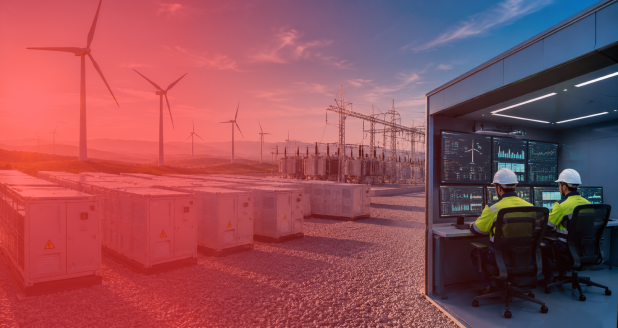
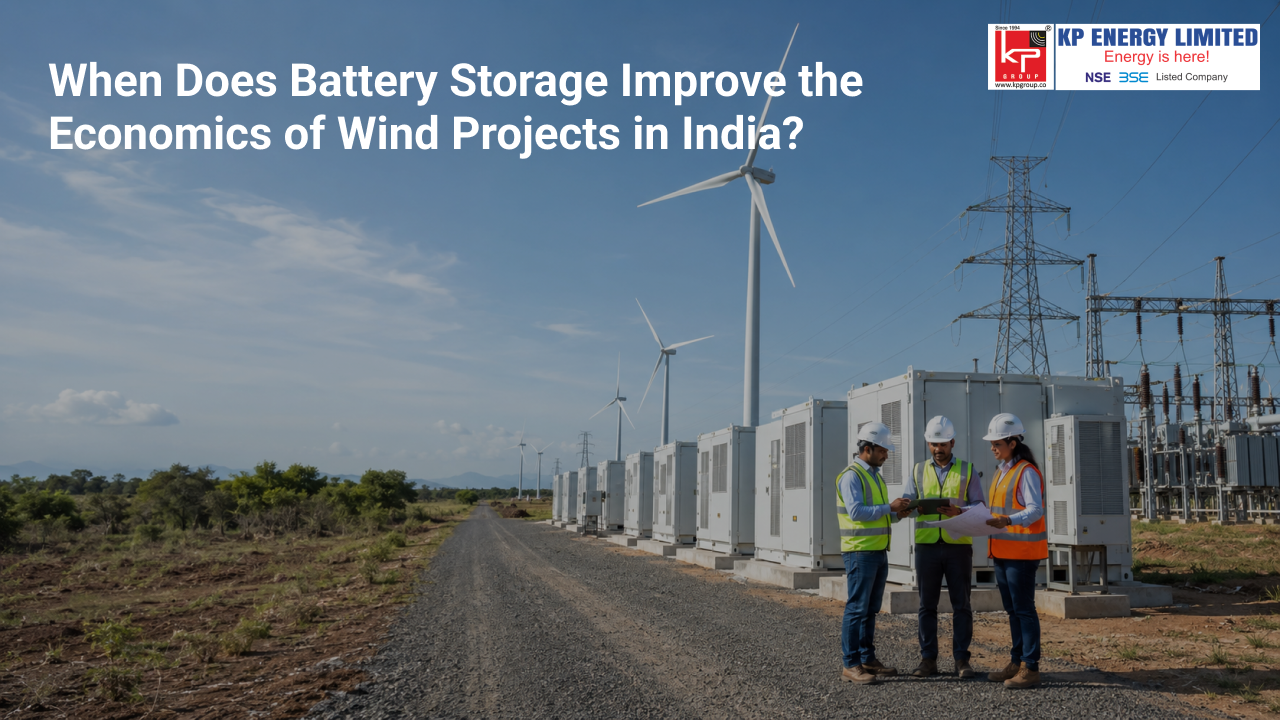
A wind farm in Gujarat can run hardest during the monsoon, when most of India's annual wind output is concentrated.
For developers, the real question is whether battery storage for wind projects in India improves the economics, or simply adds capex to a project that was already viable.
Falling battery costs and a procurement shift toward firm dispatchable power have changed the answer. This piece walks through where storage earns its place in a wind asset, where it doesn't, and how to tell the two apart.
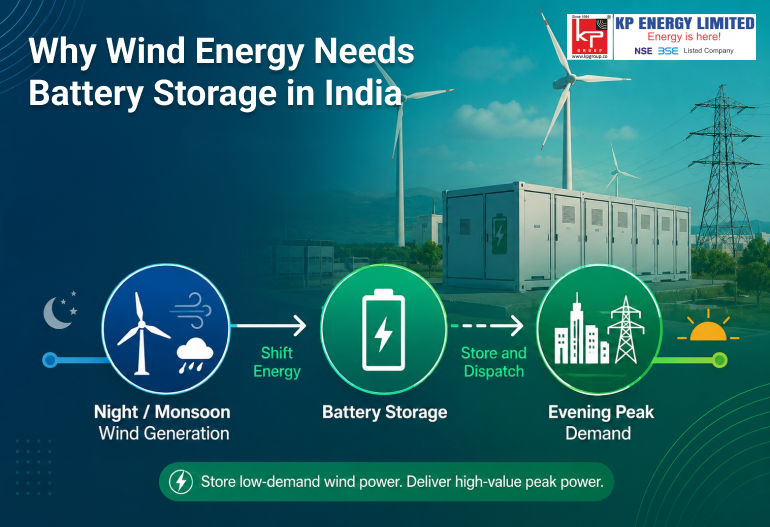
Wind in India is generous, but inconveniently timed.
Most annual generation lands between May and August, and a lot of it arrives at night. Demand peaks in the evening. That mismatch is the core problem.
Storage shifts the timing of supply to match the timing of demand. Without it, a wind project sells when prices are floored and produces nothing when prices climb.
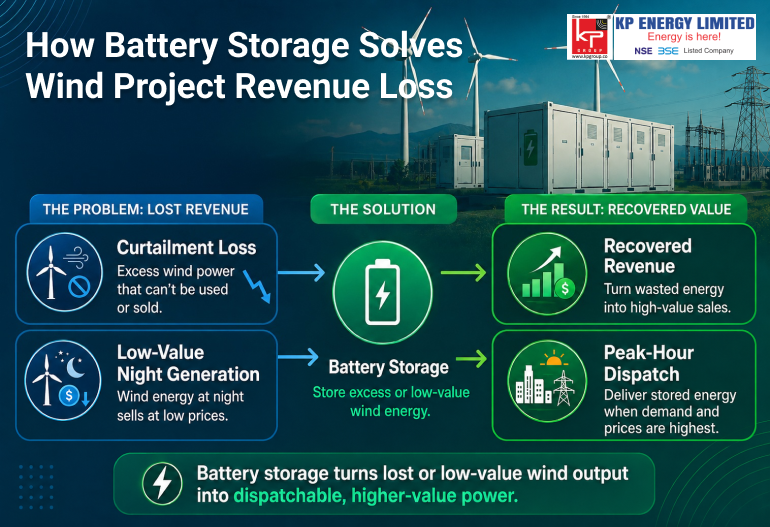
Two real enemies define wind project economics today.
When evacuation capacity is tight or daytime demand softens, grid operators ask projects to throttle down. Revenue is lost on power that could have run.
Rajasthan and Gujarat have both seen meaningful renewable energy curtailment reduction become an active policy priority for a reason.
Wind at midnight earns far less than wind at 7 PM. Storage holds that off peak output and releases it during the evening peak.
Wind energy battery storage India turns both problems into opportunities. The catch is exposure. A project has to actually face these problems for storage to solve them.
Three situations tip the maths clearly toward storage:
High curtailment risk geographies. Storing what would otherwise be lost recovers stranded revenue.
FDRE projects in India and RTC renewable energy India tenders. Firm supply tariffs sit structurally higher than pure wind, and BESS for wind power projects is what makes firm delivery possible.
Hybrid PPAs with commercial offtakers. Industrial buyers paying for round the clock clean power value reliability directly.
KP Energy's recent wind solar hybrid with battery storage contracts in Gujarat for JK Paper and Enerparc sit in the third category. The offtaker is paying for firmness. Storage earns its place in the capital stack.
Uplift. Strong sites with reliable evacuation face the same logic. The asset is already monetising most of what it makes. Storage solves a problem the project doesn't have.
The lesson is plain. Wind power storage solutions earn their place when there's a specific economic injury for them to heal.
|
Scenario |
Does Storage Help? |
Why |
|
Pure wind site, locked PPA, strong evacuation |
No |
No exposure to curtailment or peak pricing |
|
Wind site in high curtailment corridor |
Yes |
Storage recovers stranded revenue |
|
FDRE or RTC tender participation |
Yes |
Firm tariffs reward dispatchability |
|
Wind solar hybrid for industrial offtaker |
Yes |
Buyer pays for round the clock supply |
|
Merchant or exchange exposed project |
Often Yes |
Arbitrage between off peak and peak |
|
Greenfield wind in low demand state |
Mostly No |
Capex doesn't recover without a revenue path |
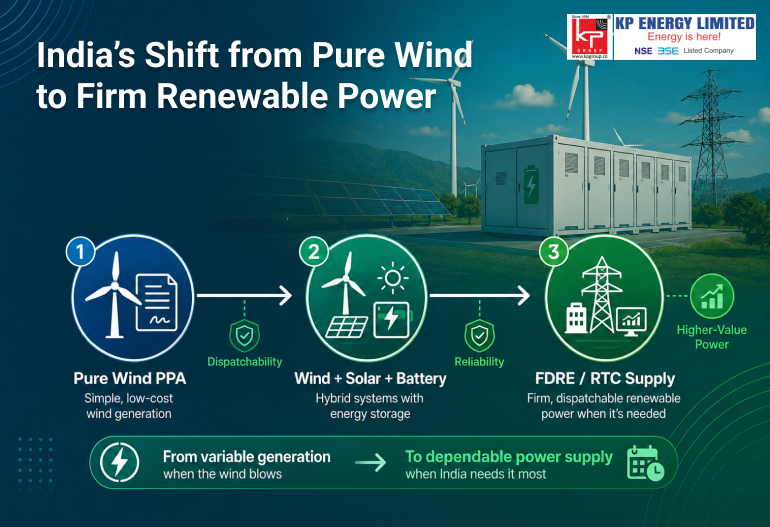
The way India buys renewable power has changed. Earlier, the government asked developers to simply build wind projects and sell whatever they generated. Now, buyers want power that shows up when it's needed, not just power that's cheap on paper.
What's shifting:
Pure wind contracts are no longer the only option. Tenders now ask for wind paired with batteries, or wind blended with solar and storage together.
Buyers are paying for reliability, not just generation. A project that can deliver power during evening peak hours earns more than one that only sells whatever it produces.
State utilities are leading the change. Gujarat, in particular, has been running active auctions for standalone battery storage alongside its wind and solar tenders.
Where KP Group sits in this shift:
KP Energy won a 100 MW wind project from SECI in early 2026, showing that traditional wind contracts still earn.
KP Group won a separate Gujarat battery storage auction, signalling its move into pure storage assets.
KPI Green Energy signed a battery storage contract with the same state utility, expanding the group's storage footprint further.
What's pushing the shift:
Battery costs have dropped sharply in just a few years, confirmed officially by the Ministry of Power.
India's long term power plan expects a massive build out of storage capacity over the next decade.
The bottom line: pure wind still earns. But wind that can deliver power on demand is starting to earn more. For a closer look at how these power contracts are being drafted, read how hybrid renewables are reshaping power purchase agreements.
For independent power producers, wind-plus-storage only works when the project has a clear revenue path through curtailment recovery, peak dispatch, or firm supply contracts. KP Energy supports independent power producers with end-to-end wind project development, hybrid planning, infrastructure, and commissioning support.
Does adding battery storage always make a wind project more profitable?
No. Storage pays back when the project faces curtailment, peak pricing gaps, or firm supply obligations. On a locked in pure wind PPA, it usually adds cost without revenue uplift.
What is FDRE and how does it relate to wind plus storage?
Firm and Dispatchable Renewable Energy is a government tender category combining wind, solar, and storage to deliver power on demand. It pays for firmness, which is what makes a battery energy storage system for renewable energy commercially viable in these contracts.
Which Indian states benefit most from wind plus battery storage?
Gujarat, Rajasthan, and Tamil Nadu. Strong wind resource, active curtailment pressure, and state appetite for firm supply.
How is Indian policy supporting wind plus BESS projects?
Viability gap funding for grid scale battery storage and ISTS charge waivers for qualifying projects have lowered the effective cost of adding storage to a wind asset.
What separates storage backed wind from pure wind projects in India?
Pure wind sells what the turbine produces, when it produces. Storage backed wind shifts generation to higher value time slots and can compete in firm supply tenders.