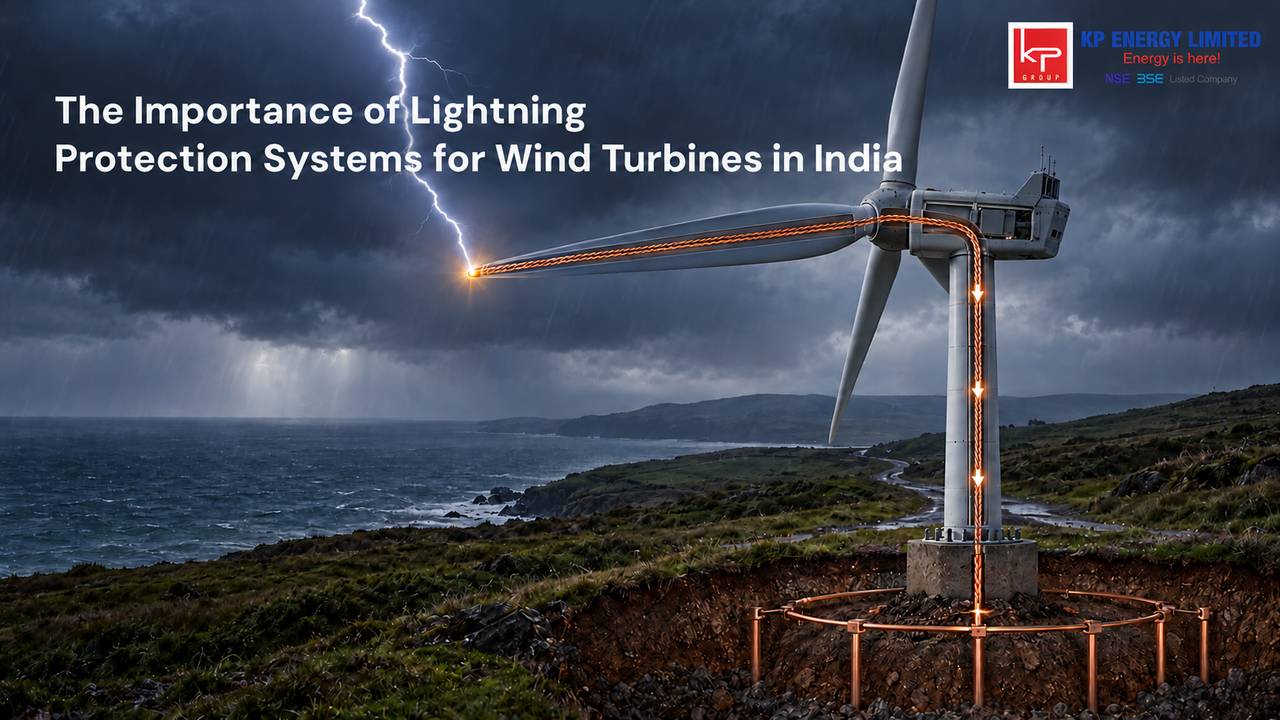
Wind turbines need lightning protection because their height, rotating blades and exposed locations make them vulnerable to strikes. Blade receptors, down conductors and earthing networks safely channel lightning current to ground, while surge protection devices help protect electrical and control systems. As the wind energy industry in India expands across coastal areas, hilltops and open plains, effective protection helps reduce equipment damage, downtime and repair costs. By supporting reliable operation over a turbine’s service life, it also strengthens the long-term sustainability characteristics of wind energy.
Lightning protection systems help safely conduct lightning current from blades and nacelle to the ground, reducing damage to blades, generators, control systems and electrical equipment.
Wind turbines can be more susceptible to lightning directly hitting them due to their physical size and operational location. Wind turbine towers already stand higher than 80 - 120 meters in height, while the blades can extend even higher when rotating. Therefore, they can become natural lightning conductors in open landscape areas. The importance of lightning protection in wind energy cannot be emphasized enough, especially in India where the monsoon carries severe electrical storms in a number of wind states, such as Tamil Nadu, Gujarat, Karnataka, and Maharashtra.
Height and Exposure: Wind turbines are normally mounted in high, exposed positions to maximize the wind capture, making them an easy target for lightning strikes.
Material Types: The combination of conductive materials (metal towers) and non-conductive materials (composite blades) creates complex requirements for lightning protection.
Strike Frequency: A single wind turbine could experience multiple lightning strikes in one year, with some sites in prime lightning areas recording more than one hundred strikes per year.
If proper lightning protection is not installed, one lightning strike can sequentially cascade through electrical systems and could potentially destroy sensitive components, such as generators, controllers and power electronics worth crores of Indian rupees.
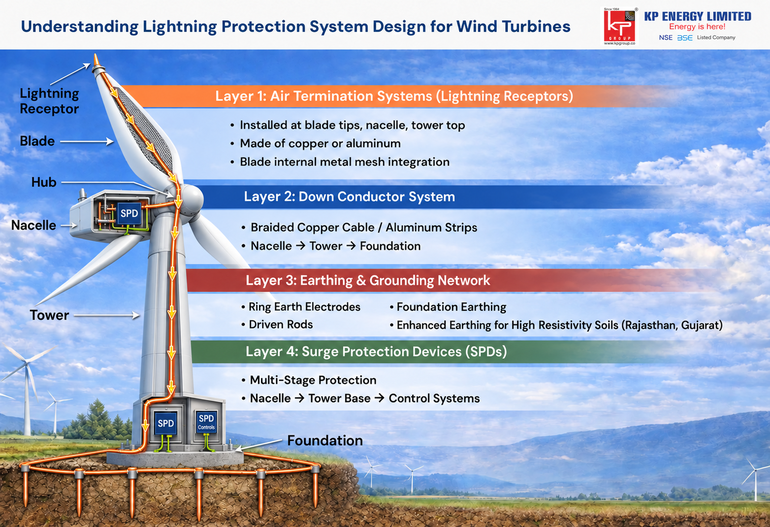
A comprehensive wind turbine lightning protection system design integrates multiple protective layers working in harmony to safely channel lightning energy into the ground. The system architecture follows internationally recognized principles while adapting to India's specific geographical and meteorological conditions.
Air Termination Systems (Lightning Receptors) As the first line of defense, receptors are positioned at the tips of blades, over the nacelle, and on top of the tower. Usually made of copper or aluminum, receptors attract a lightning strike and provide justified paths for the discharge of electrical energy into the turbine support. Newer designs for the wind turbine grounding and earthing system incorporate metal mesh inside the components of blades, providing protection through the entire blade surface.
Down Conductor Systems Once energy from the lightning has entered the receptor, down conductors typically made of braided copper cable or aluminum strips provide a low-resistance path through the nacelle, into the tower and into the foundation.
Earthing and Grounding Networks Any lightning protection system begins with earthing. Through ring earth electrodes, driven rods, and foundations with earthing arrangements titanium provides low impedance paths to the earth and allows it (energy) to dissipate safely to the ground. In rocky or high resistive soils/situations that are common throughout Rajasthan and parts of Gujarat enhanced earthing with chemical or around expansive earth electrodes systems will provide the necessary performance.
Surge Protection Devices (SPDs) Lightning surge energy can travel through power/communication cables and cause damage to sensitive equipment. Protecting sensitive equipment from transient overvoltage requires multi-stage surge protection, from the nacelle to the tower base to the earth control systems.
Lightning strikes on wind turbines can result in many different types of damage, each with significant operational and financial impacts. Understanding the effects of these hazards reveals why lightning protection prevention systems will provide a reasonable return on investment.
Blade Damage: Lightning can create punching holes, delamination, or even catastrophic failure of the composite blade materials; repair of blades also requires specialized equipment and leads to possible long downtimes.
Bearing Failures: When electrical discharge occurs through the bearings, pitting and degradation can occur ultimately leading to bearing failures and seizure of the bearings.
Generator Burnouts: Direct strikes or manifests of induced surges will totally destroy the generator windings causing the entire generators to be replaced, which requires cranes, specialized transport, and weeks of lost production time.
The impact of lightning on wind turbine efficiency and downtime go beyond just the damage it causes. Often when there is a lightning strike, the turbine will be offline while inspectors check the integrity of the structure, functionality of electrical equipment, and viability of turbine operation for several days or weeks after the strike.
Indeed, uncontrolled lightning events can pose serious hazards to workers involved in maintenance work on or near turbines. Arc flashes, step potentials, and touch voltages can lead to serious injuries or potentially fatal injuries. An adequate protection system must be installed to meet safety requirements for workers working under the Indian Factories Act and Occupation Safety standards.
One unprotected turbine damaged after a lightning event can result in lost generation on adjacent turbines due to shared electrical circuits, at times causing protective shut-downs on entire strings of turbines or subsections. The multiplier effect of this can lead to lost generation well beyond the damaged turbine's (directly impacted) generation loss.
The global wind industry relies on comprehensive technical standards to guide protection system design and implementation. Lightning protection standards for wind turbines (IEC 61400-24) provides the definitive framework, addressing all aspects from risk assessment to testing protocols.
IEC 61400-24 specifies protection levels (LPL I through IV) based on lightning current parameters, defining design requirements for each turbine zone. The standard covers:
Lightning attachment risk analysis methodologies
Material requirements for protection components
Installation practices and quality assurance procedures
Testing and inspection protocols throughout turbine lifecycle
The renewable energy safety standards in India references IEC standards for provision, while also considering local conditions. The Central Electricity Authority (CEA) requires technical standards for grid-connected wind projects, including lightning protection measures. Compliance is enforced at the project approval and commissioning stages by local/state nodal agencies such as the Tamil Nadu Energy Development Agency (TEDA) and the Gujarat Energy Development Agency (GEDA).
There are insurance companies who require, or expect, developed insurance-covered documentation to increase probability of coverage for lightning protection systems against an IEC Standard. Projects that develop lightning protection systems and use those which have related coverage documentation will see a higher probability of lower premium categories and expedite the claims processing, making the argument for a strong business case for capital invested for adequate protection.
Wind Farm Safety Measures and Preventive Maintenance Practices
While initial protection systems provide an immediate solution, ongoing wind farm safety measures in India actually needs a systematic maintenance program for continuing effectiveness. Components begin to change as they age, and environmental conditions will certainly also change.
Annual visual check
Receptor inspection
Continuity testing
Earth resistance testing
SPD status check
Post-strike inspection
Thermography
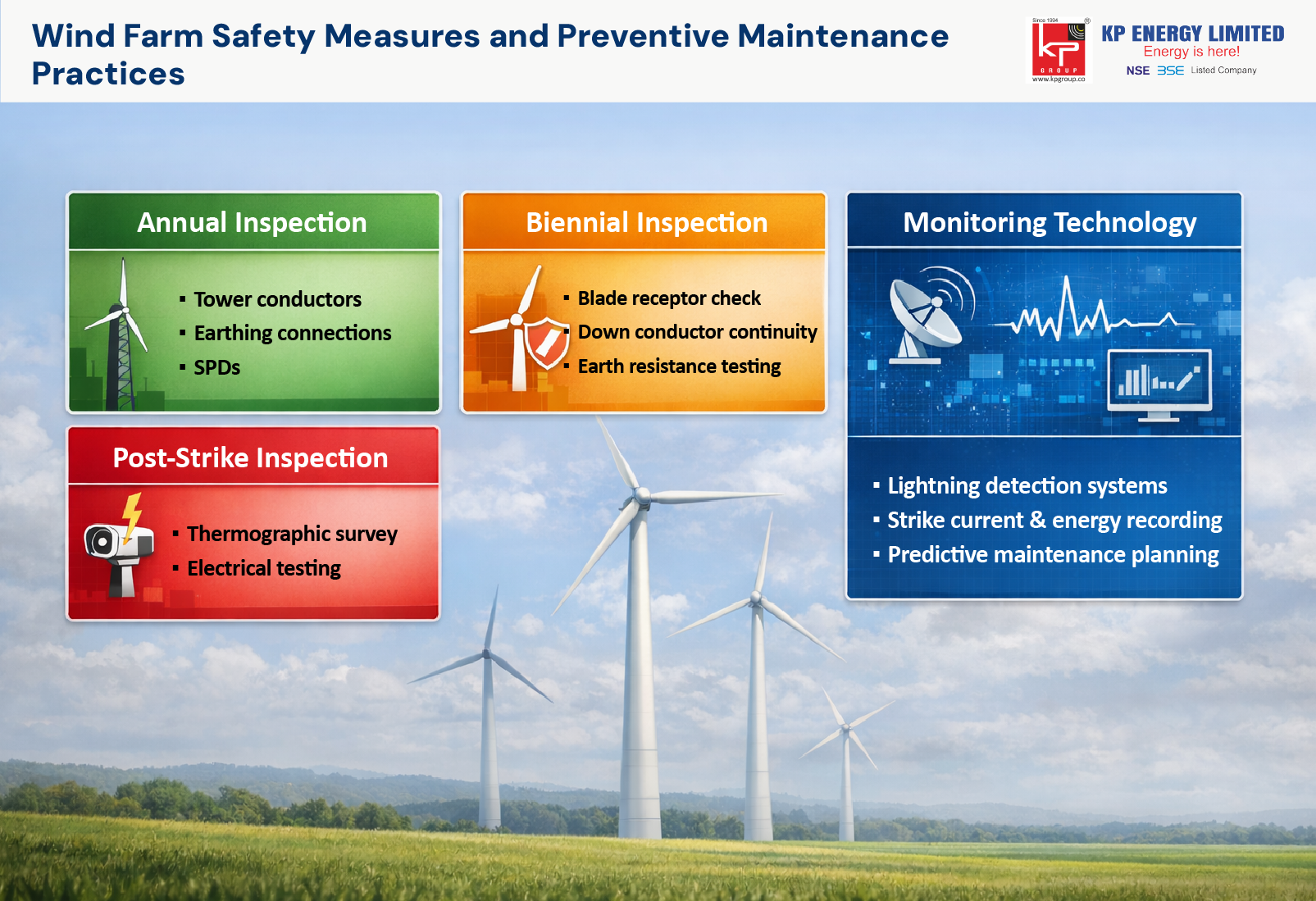
Wind turbine maintenance follows an established schedule in conjunction with manufacturer recommendations and regulatory requirements:
Annual Visual Inspection: Inspections at the ground level of tower conductors, foundation earthing connections, and surge protective devices.
Biennial Detailed Inspection: Close range inspections of blade tip receptors, down conductor continuity testing, and earth resistance testing.
Post-Strike Inspection: Full inspection following a confirmed or suspected lightning strike, including thermographic surveys and electrical testing.
Modern wind farms utilize lightning detection systems recording the location of strikes, current, and energy level of strikes to:
Schedule predictive maintenance based on lightning exposure
Link performance issues with lightning strikes
Provide supporting evidence for insurance claims or waranty claims
Improve design of protection systems across the fleet.
Routine maintenance actions include:
Cleaning and retightening earthing connections that have corroded or experienced thermal cycling
Changing out surge protection devices that have degraded based on an indicator or time of service
Fixing blade receptor bonds that have degraded through erosion or mechanically stressed
Improving earthing systems where the soil resistivity has increased due to drought
Leading developers, like KP Energy, incorporate lightning protection during all project phases, from project site selection and micrositing to operating era. Instead of considering protection systems only during the construction phase and retrofitting later, excellent performance and lower lifecycle costs can be achieved. KP Energy is also known for achieving high safety standards across its wind assets as they continue to grow.
To support this end-to-end approach, KP Energy delivers comprehensive wind project execution through its EPC scope of services, covering design, engineering, procurement, construction, and commissioning
Considering lightning protection systems for wind turbines solely as cost centers misses their value creation characteristics. A strong protection system will provide measurable returns in several areas of project economics.
Lightning damage can speed up the deterioration of equipment even if the equipment does not fail immediately. Blades that incur minor lightning damage suffer from accelerated fatigue, generators with some windings damaged are run hotter and less efficiently, and bearings that sustained an electrical discharge fail prematurely. When lightning protection is effective, the designs are preserved, and the life and value of these assets are preserved, so that major capital improvements can be pushed down the road.
Lenders and investors recognize that quality of lightning protection is one of the risks they consider. Projects that demonstrate to be protected by a comprehensive, compliant, lightning protection system are rewarded with:
Lower insurance premiums - 10-20% lower than baseline insurance rates
Better debt terms, and take into account lower interest margins
Much quicker due diligence process in the project acquisition or refinancing phase
Higher project value in consideration of the lower technical risks
Shielded wind farms experience decreased unplanned outages, thereby maintaining more successful relationships with grid operators and avoiding penalties due to unavailability during peak demand. This reliability helps justify taking part in ancillary services markets, as well as capacity mechanism programs being established by various states in India.
Lightning protection systems for wind turbines is an example of this commitment and highlights the important intersection of engineering rigor, economic feasibility, and safety. From the thorough receptor network designs to the continual maintenance of earthing systems, the entire lightning protection approach makes wind investments more resilient and profitable.
Why Do Wind Turbines Need Lightning Protection Systems?
Wind turbines require lightning protection; as they are generally very tall (80-120 m) and typically sited in open locations, they are extremely vulnerable to lightning strikes. In the absence of a protection system, lightning can destroy blades, generators, and controls, leading to a repair cost of more than ₹50 lakhs per incident, not to mention downtime. Protection systems safely divert lightning energy away from the turbine and into the ground, thereby protecting the equipment while keeping personnel safe.
How Does IEC 61400-24 Standard Apply to Wind Turbine Lightning Protection?
IEC 61400-24 is the international certification for wind turbine lightning protection, and provides a lightning protection level classification, specifies design specifications for receptor, conductors and earthing system, and requirements for testing. Indian wind projects must provide evidence of compliance with IEC 61400-24 for regulatory compliance and eligibility for insurance.
What Are the Main Components of a Wind Turbine Lightning Protection System?
These may include: air termination receptors on blade ends and nacelle, down conductors in the tower, grounding or earthing network in the foundation, and surge protection for electrical systems. The components together operate to attract lightning strikes, provide controlled discharge paths, and protect sensitive electronics from transient overvoltages.
How Does Lightning Impact Wind Turbine Performance and Downtime?
Strikes from lightning create instant damage from initially puncture of blades, bearing failures, and burnout of generators. Even if a strike does not result in catastrophic failure, strikes require mandatory assessments that take days or even weeks for their results to be realized, and during that period there can be no generation. Across the wind farm industry, annual timeout from initial lightning strikes (without any protections) is an estimated 5-8 percent of uptime, regardless of generation revenue loss; for larger wind farms this can mean millions of dollars lost every season.
What Maintenance Is Required to Ensure Reliable Lightning Protection in Wind Farms?
Necessary maintenance includes (1) visual inspection of all protection parts yearly, (2) a detailed inspection every two years which includes both electrical continuity testing and mechanical signal testing, (3) measuring grounding resistance every two years, (4) post lightning assessments, and (5) replacing surge protection devices as needed when they are no longer capable of efficient conducting. Power quality monitoring of wind turbines with thermographic imaging, and identification of lightning strikes with monitoring systems will help identify issues before there may be any that compromise the design and functionality of protecting from lightning.