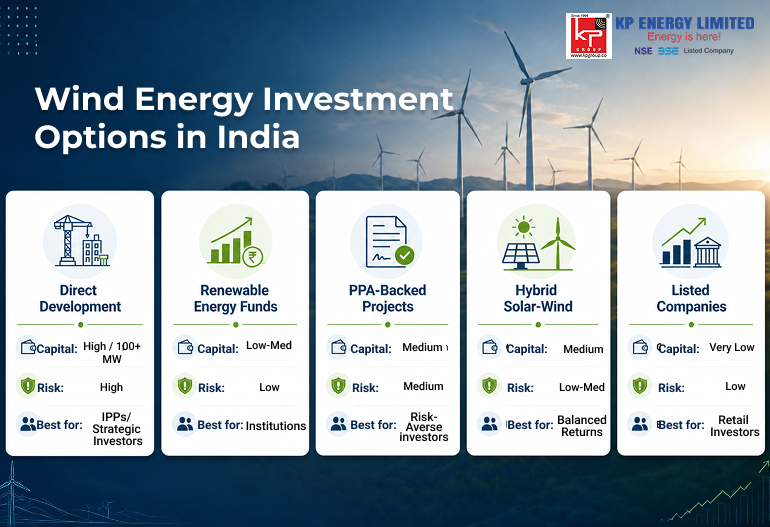
You can approach wind investing in India several ways. Direct project development. Renewable energy funds. Listed companies. PPAs. Captive arrangements. Hybrid solar-wind setups. The path depends on your capital, risk tolerance, and operational appetite.
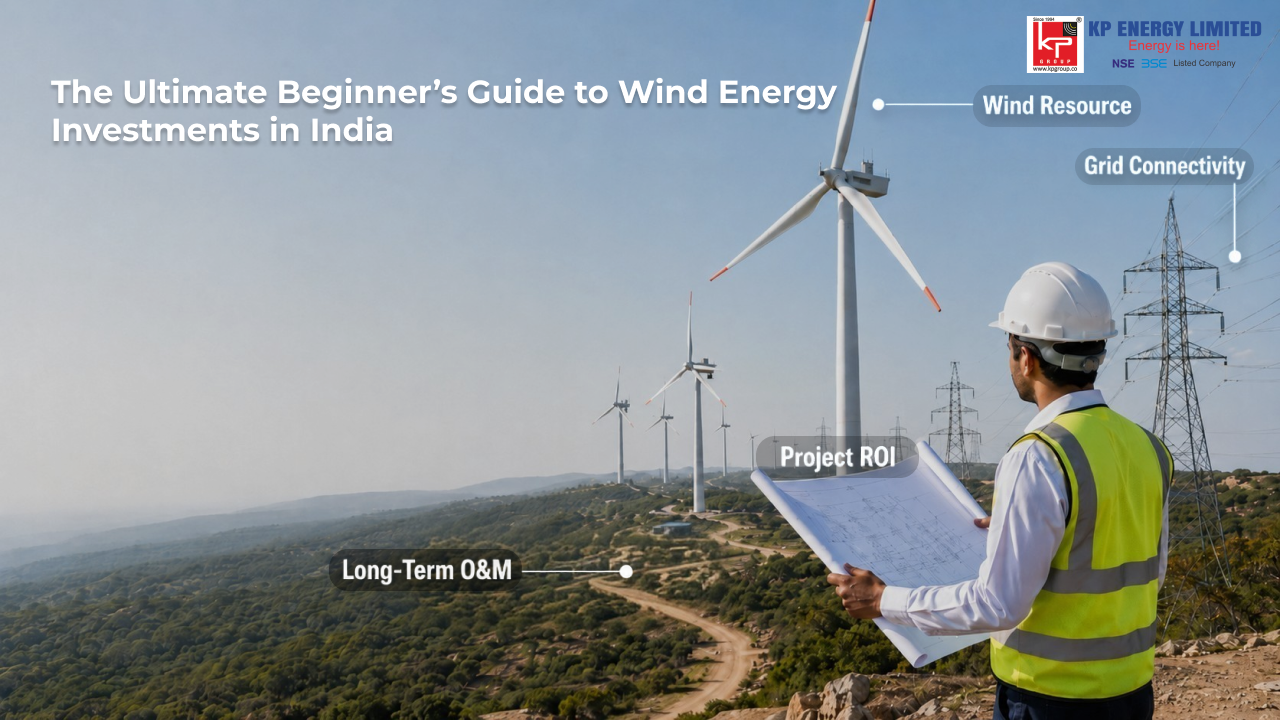
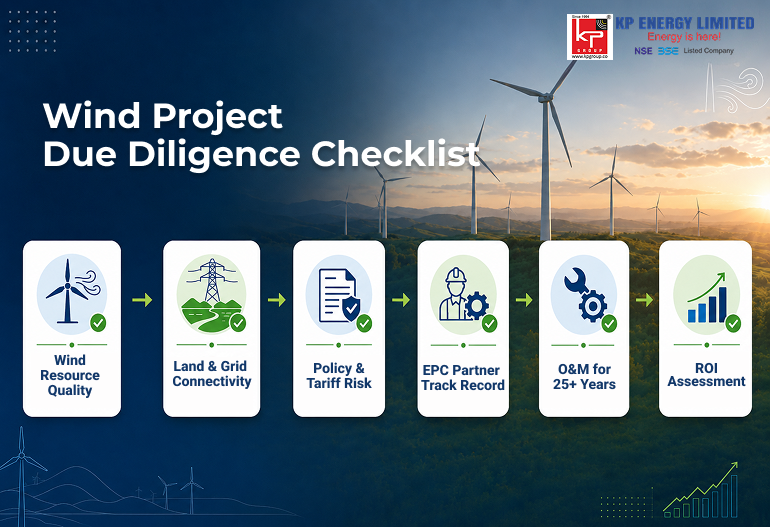
When you're evaluating a project, focus on wind resource quality first. Then land. Then grid connectivity. After that, policy risk, tariff structure, how strong your EPC partner is, and whether O&M will actually happen for 25+ years.
India's wind sector is moving. In FY 2025-26, 6.05 GW was added. That's a 46% jump from the year before. Cumulative capacity hit 56.09 GW. The wind energy sector in India is positioned as one of the world's most dynamic clean energy investments in India.
Those numbers matter because they tell you something simple: the sector is scaling. India's aiming for 500 GW renewable capacity by 2030. Wind has to carry a meaningful portion of that weight.
What's different now versus five years ago is the landscape itself has matured. You're not betting on an emerging market anymore. This is already a functioning ecosystem with established rules, known players, and transparent pricing. That matters for risk management.
Price stays predictable
Fossil fuel costs swing wildly. With wind, you're locking in energy prices through PPAs or internal offtake agreements. Reduces portfolio volatility if energy is part of your operational cost.
Regulatory cover is real
Global emissions standards tighten every year. India's net-zero commitment to 2070 is legally binding. Companies investing in clean energy aren't gambling on policy, they're hedging against regulatory obsolescence.
Institutional capital cares
Pension funds, insurance companies, university endowments, they need stable, long term assets that align with ESG mandates. Wind projects hit that mark if they're structured properly.
The tech actually works
Modern turbines operate at capacity factors of 35-45% depending on location. Maintenance costs have dropped. Supply chains are established. This isn't experimental anymore.
Energy demand is rising
India's growing at 7.8% GDP annually. That needs power. Renewables have to fill most of it because there's no realistic alternative at scale.
Tariffs have fallen from INR 7+ per kWh to INR 2.5-3.5 through competitive auction pressure.
Institutional investors (pension funds, insurance, endowments)
Infrastructure funds (dedicated renewable energy portfolios)
Corporates seeking sustainability goals and energy independence
C&I consumers (commercial and industrial users)
Independent Power Producers (IPPs) developing projects for sale
Family offices and high net worth individuals
Retail investors (through listed renewable energy companies)
|
Model |
Capital |
Risk |
Returns |
Best For |
|
Direct Development |
100+ MW |
High |
Highest |
IPPs, strategic |
|
RE Funds |
Low-Med |
Low |
Moderate |
Institutions |
|
PPA Backed |
Medium |
Medium |
Good |
Risk averse |
|
Hybrid Solar-Wind |
Medium |
Low-Med |
Very Good |
Balanced |
|
Listed Companies |
Very Low |
Low |
Moderate |
Retail |
Wind power investment opportunities in India in both onshore and offshore segments, both with specific advantages and risks.
Onshore wind is where the market is today. It has supply chains. It has regulatory clarity. It has a playbook. You can build a project from land acquisition to commissioning in 18-24 months if conditions are right.
Gujarat, Karnataka, Maharashtra, Tamil Nadu, these states have infrastructure, experience, and land. Your operating data pool is deep. When a similar project was built in Rajasthan with similar wind speeds, you know roughly what to expect.
Upfront costs are lower than offshore. You're not dealing with marine construction complexity. Grid connections are established in most windy regions. This matters because grid delays can kill project timelines.
Here's what's interesting about offshore. India has 7,600 kilometers of coastline. The National Institute of Wind Energy estimates 140 GW of potential. That's not nothing.
Gujarat and Tamil Nadu account for about 71 GW of that. Wind speeds offshore are faster and more consistent than land. Capacity factors can hit 45-50% instead of 35-40%.
The catch: offshore is still early. Capital requirements are heavy upfront. You're dealing with floating platforms in some cases, subsea cable installations, marine construction crews. India's offshore wind target is 30 GW by 2030, but that's aspirational right now.
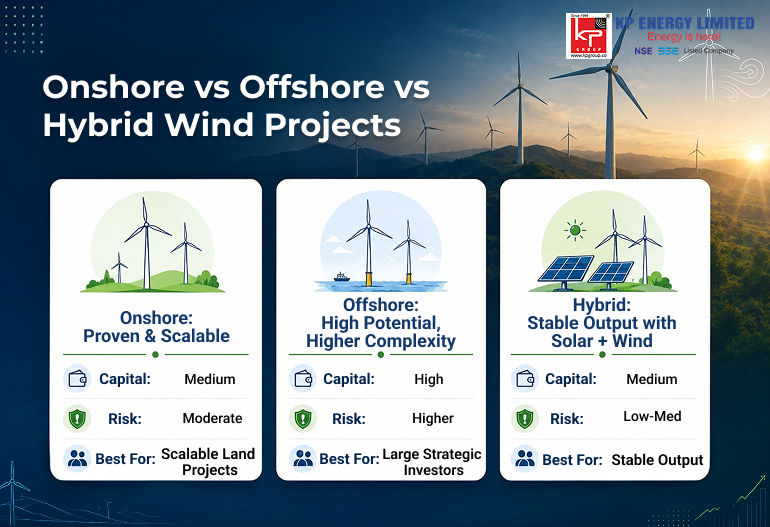
Wind picks up in evenings and monsoons, solar peaks during afternoons. On a single site, you're generating more consistently across the day and season.
Practically: you reduce land costs because two revenue streams share infrastructure. Grid stability improves because the output profile is flatter. Revenue volatility drops because you're not entirely dependent on one resource.
The government backs this approach. Auction mechanisms favor hybrids. That's because the grid benefits. That benefit flows back to investors as better tariff structures and regulatory support.
Wind Resource Quality:
Minimum 1 year onsite measurements, seasonal patterns, turbulence assessment
Land and Grid Connectivity:
Secure long term tenure, reliable transmission access, proximity to substations
Policy and Tariff Risk:
Accelerated depreciation (80% Year 1), ISTS waiver (until June 2028), state renewable purchase obligations
EPC Partner Track Record:
Proven execution, quality management, cost control, schedule adherence
Operations and Maintenance:
Long term O&M strategy, spare parts availability, performance monitoring systems
Resource Risk:
Comprehensive meteorological modeling, wind resource insurance, seasonal forecasting
Regulatory Risk:
Geographic diversification across states, active policy engagement, tariff protection in contracts
Currency Risk:
Hedging instruments for imported components, local content requirements in procurement
India's renewable energy investment ecosystem combines strong private and public sector participation. Private companies drive innovation and improve project execution efficiency. State owned enterprises like Solar Energy Corporation of India (SECI) provide stability and scale through competitive auctions.
Foreign investment is increasingly important. Global developers and financial institutions view India as a major growth market.
India is expected to increase renewable energy investment by 83%, with total investment reaching approximately $170 billion in 2026.
Several investment models can accommodate different risk appetites and capital needs. Investing in wind energy through direct project development will expose investors to the greatest capital and risk, while providing the maximum control and potential returns. Investors can acquire land, secure permits, and develop projects from start to commissioning.
Financial investment in renewable energy infrastructure funds provides exposure to a diversified wind energy portfolio with professional management. These funds generally invest in existing operational projects, as they attain a reliable cash flow with lower development risk.
Power Purchase Agreement (PPA) backed investments provide an added level of security by providing revenue flows through a long term contract (generally, on a fixed price basis) with a creditworthy off taker.
For wind energy investments to succeed, due diligence and project assessment is necessary. The first step in the project viability process is to assess the wind resource. Resources are assessed over at least 1 year of onsite wind measurements to develop generation estimates. The investors will need to assess the wind speed, seasonal variability and turbulence characteristics when estimating project performance.
Project returns are closely linked to execution quality, timelines, and operational efficiency. Working with an EPC partner offering a well defined EPC scope of services helps investors reduce execution risk while ensuring compliance, performance, and long-term asset reliability.
Wind energy investment in India involves several risk categories that investors must understand and mitigate. Resource risk relates to wind speed variability and long term climate patterns. This can be addressed through comprehensive wind studies, advanced meteorological modeling, and insurance products that protect against underperformance.
Regulatory risks stem from changing policies, changing tariffs, and complications in the grid integration process.
Potential ways to reduce regulatory risk include
Geographic diversification
Being an involved stakeholder in the regulatory formation process
Structuring contracts that provide protection from specified regulatory changes.
Currency risks are related to imported project components and, if present, these risks could be reduced with hedging instruments and putting local content amounts into the contracts.
The wind energy sector growth India trajectory remains exceptionally bright. With record FY 2025-26 additions of 6.05 GW and government targets of 500 GW by 2030,
The investment pipeline is robust.
Technology continues improving: larger turbines, advanced blade designs, and predictive maintenance systems increase efficiency and reduce costs.
As India advances toward its net zero 2070 commitment, wind power will play an increasingly central role.
The combination of favorable policy, abundant resources, rising energy demand, and proven economics creates compelling opportunities for investors who understand the market.
Sector is accelerating with strong government backing
Multiple investment pathways: direct development, funds, PPAs, hybrid projects, listed companies
Onshore market is mature; offshore is the emerging frontier
Success requires local market knowledge, rigorous due diligence, and experienced partners
Key evaluation: wind resource quality, land tenure, grid access, EPC capability, long term O&M
Risks are manageable: resource assessment, geographic diversification, hedging strategies
Open to all investor types: institutions, corporates, family offices, retail
Returns are competitive with ESG alignment and price stability benefits
Hybrid solar-wind projects offer superior economics and lower volatility
Policy environment is supportive and long term committed (net zero 2070)
Future outlook is exceptionally promising for disciplined investors
Is Wind Energy Investment Profitable in India?
Yes, when structured properly. Modern turbines are efficient and cheaper to operate than ever. Competitive auctions have made pricing transparent and predictable. The key is location selection, good project management, and solid long term operations. Returns are competitive and increasingly attractive as technology improves.
What Are the Risks of Investing in Wind Energy?
If you don't take into consideration the policy changes, they can have an impact on tariffs and restrictions on the power grid. For example, the wind can be stronger at certain times of the year and the changes in the weather can be more sudden than usual. Besides that, there can be delays in the construction and the need for attention to the operation.
How Do I Choose Between Onshore, Offshore, and Hybrid Projects?
Onshore is proven and mature faster to build, lower costs, clear playbook. Offshore is the frontier with better wind resources but higher capital and technical complexity. Hybrids split the difference: combine wind and solar on one site for stable output and lower land costs. Match your risk appetite and capital to each model.
What's the Timeline and Return Potential?
Onshore projects typically generate returns within 8-12 years. Hybrids offer better returns due to complementary generation patterns. Offshore takes longer and costs more upfront but promises superior long term economics. Returns depend on wind quality, tariff, and execution work with experienced partners to assess realistic projections.
How Stable Is Government Policy for Wind Energy?
Very stable. India's net-zero commitment by 2070 is legally binding, creating long term policy continuity. Key incentives like accelerated depreciation and ISTS waivers are in place. Competitive auctions ensure price discovery. The regulatory environment has matured substantially, reducing uncertainty for serious investors.