Every utility-scale wind developer and independent power producers who have navigated complex execution environments recognize this frustrating pattern:
The civil team points at the electrical team.
The electrical team points at the turbine vendor.
The project slips, costs climb, and nobody fully owns it.
That outcome is decided long before construction starts, in the choice of who builds the farm.
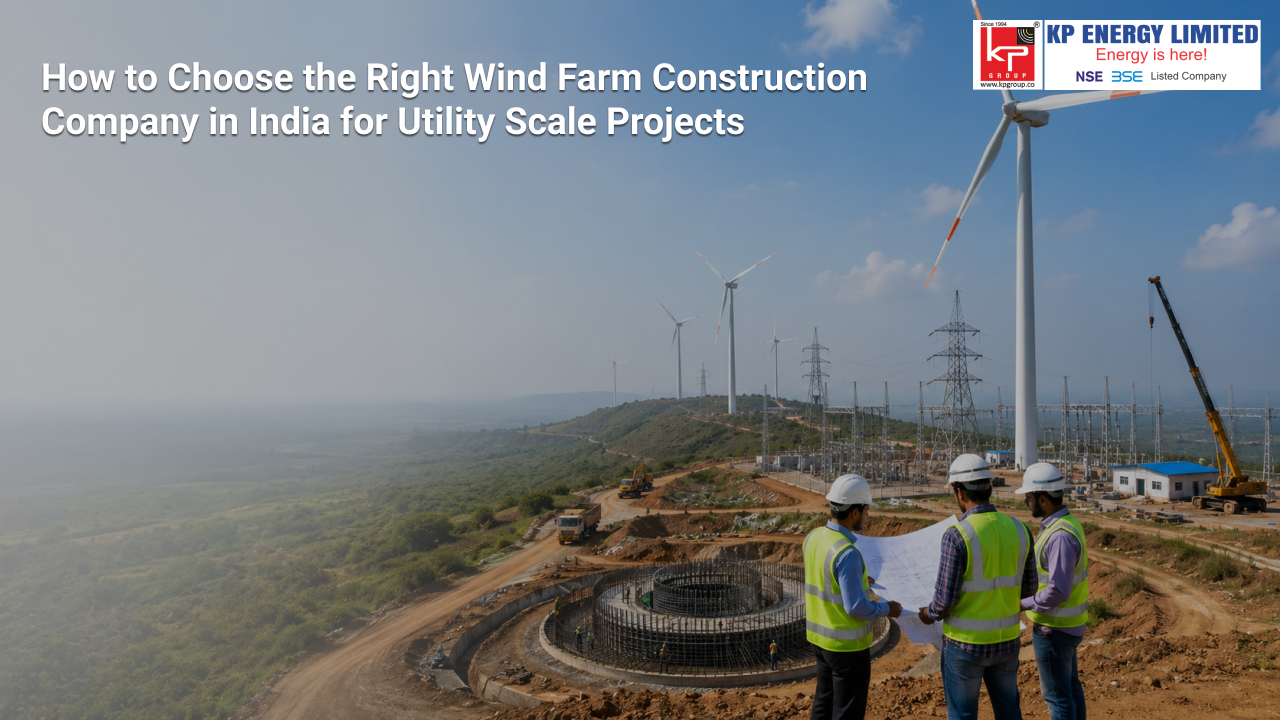
This blog breaks down how to actually evaluate a wind farm construction company in India for a utility scale project. What to check, what to verify, what to walk away from. By the end of it, reading any vendor proposal feels less opaque. The gaps stand out, the real risks become visible, and the questions worth asking surface on their own.
|
Evaluation Area |
What It Covers |
Why It Matters |
|
Track Record |
Commissioned capacity, years in operation |
Proves real execution capability |
|
Scope of Work |
End to end vs partial coverage |
Single accountability vs split risk |
|
Land and Permits |
Inhouse handling of land and approvals |
Where most projects slip |
|
Technical Depth |
Civil, electrical, commissioning capability |
Determines build quality and timelines |
|
After Commissioning |
O&M continuity beyond construction |
A wind asset runs 25 years |
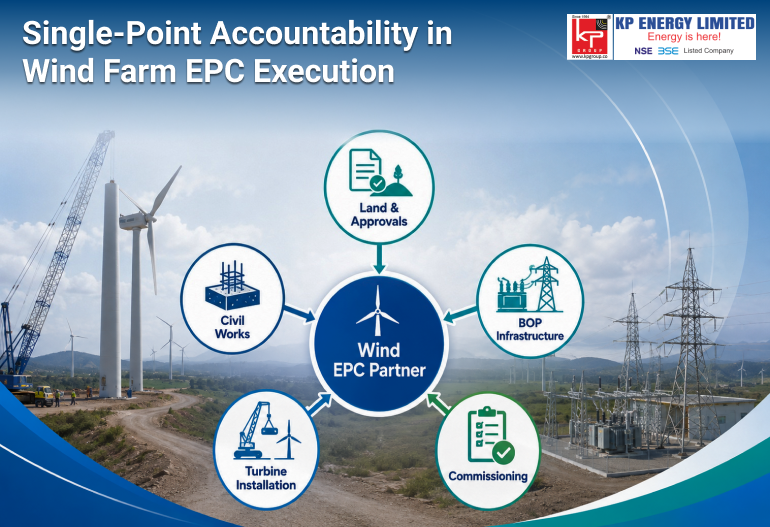
A full scope wind EPC company in India manages the entire project, from engineering and procurement to construction and commissioning. The scope covers:
Land
Permits
Civil foundations
Internal roads and lines
Pooling substations
EHV evacuation
Turbine installation
Commissioning.
Utility scale wind energy projects in India cannot be coordinated through five separate vendors. Most developers appoint one wind EPC company in India under a single contract.
Single point accountability is the whole reason this model exists.
Wind is not technologically mysterious. Execution is the hard part. Look at:
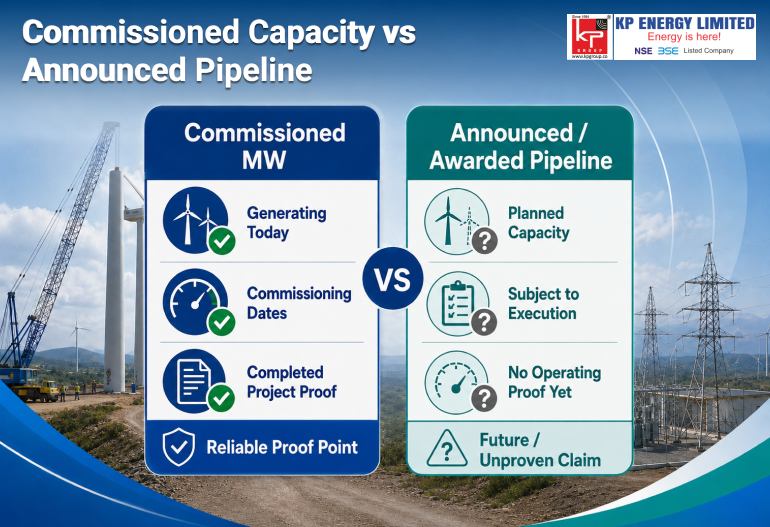
Commissioned capacity, not "projects undertaken."
Actual MW generating today.
Ask for completed project lists.
Ask for commissioning dates.
A wind farm EPC contractor India shortlist should be based on commissioned projects, not announced pipelines or awarded contracts. Hesitation to share or unavailable data is itself a signal. A useful starting reference is to refer to a list of top wind EPC companies in India.
A wind farm has a generating part (the turbine) and everything else around it. Everything else is called Balance of Plant, or BOP. It covers:
Civil foundations
Internal roads
HT lines
Capable wind balance of plant contractors deliver all of it under one scope. When the civil team blames the electrical team blames the turbine vendor, the project waits. Look for wind BOP services in India that offer end-to-end services.
The hardest part of utility scale wind is the land, not engineering. A 100 MW project may need hundreds of acres aggregated from dozens of separate owners.
Add MoD clearance, NIWE registration, environmental approvals, grid connectivity. Each runs on its own timeline.
A strong wind power project development company in India keeps a permanent inhouse team for this work. Outsourced land handling is a warning sign worth taking seriously.
|
Capability |
What to Verify |
|
WTG foundation construction |
Soil testing, casting quality, design certification |
|
Internal road network |
All weather access for the full project life |
|
Internal HT lines |
Cable specs, trenching standards, fault tolerance |
|
Pooling substation |
33/66 kV or 33/220 kV proven experience |
|
EHV evacuation |
EHV evacuation |
|
EHV evacuation |
Tested protocols, documentation, training |
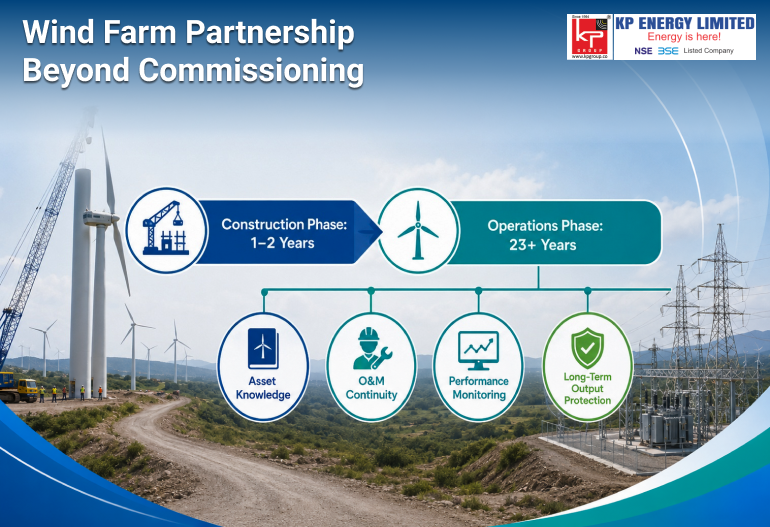
A wind farm runs for 25 years. Construction takes two of them. The remaining 23 are operations.
The builder understands the asset's quirks better than any successor will. The strongest wind turbine installation contractor India options build for long term performance, not just commissioning targets.
Capable wind farm commissioning services providers offer long term O&M through dedicated subsidiaries. A renewable energy EPC company in India that disappears after the ribbon cutting leaves the owner with a 23 year problem.
The right partner has proven,
Commissioned capacity
Full end to end scope
Inhouse land and permits depth
Real after-commissioning presence.
Price matters, but capability evaluation should always be put first.
A wind power plant construction company chosen on bid alone almost always costs more in the long run than the upfront savings ever justify.
What is a wind farm construction company?
A wind farm construction company builds utility scale wind projects end-to-end, covering land, permits, civil work, electrical infrastructure, turbine installation, and commissioning.
What is the difference between a wind EPC contractor and a wind BOP contractor?
EPC covers engineering, procurement, and construction. A BOP contractor handles everything except the turbine itself. Most wind power plant construction company offerings in India combine both.
How long does it take to build a utility scale wind project in India?
Typically 12 to 18 months from land secured to commissioning, depending on terrain and grid access. WTG foundation construction alone runs 60 to 90 days per turbine site.
Can the same company build a wind-solar hybrid project?
Yes. A capable wind solar hybrid EPC company India handles both. Wind-Solar Hybrid projects share land, transmission, and substation infrastructure, which makes combined execution more efficient.
Why does operations and maintenance matter after the wind farm is commissioned?
A wind asset operates for 25 years. Without disciplined O&M, performance drops and outages rise. Continuity with the original builder usually protects long term output.